
WE OFFER SOLUTIONS FOR YOUR MACHINE PROBLEMS
Come to us for more than just parts; we offer real help and information from a real, live person with experience. We are dedicated to going the extra mile to assist you.
How to make your Engine Drive Welder last a lifetime-Part 1
If you are in business for yourself, as I am. You only make money when you are doing billable work; all other times are nonproductive. I don't have the time to run around looking for "what?" I use Amazon Prime; they will dropship anything they offer, with freight paid (in most cases). Everything on this page is available, just click on the image or "buy now" button-it costs you nothing to order off this page, and I need to eat too!
There is a catastrophic shortage of competent repair technicians in our society. If you can find a good repairman, he is two months behind, and you're down and about to lose your job. We can help you troubleshoot your SA200 issues and teach you how to prevent them before they start. We are going to start with engine control electrical failures. Today we have plastic insulation and insulation materials that were not available just a few years ago.
Let's Help Each Other!
Everybody buys from Amazon; the products on this page can be ordered by clicking the blue underlined link. It takes you to Amazon's cart, where you can order and have it delivered anywhere.
It costs you nothing, and I get a small commission; damn little, but it's something!
The one cause of electrical failures we see coming through our shop is corroded wires and connections. The vast majority of this corrosion is caused by electrolysis. In the older DC machines, it is a problem; in the newer electronic machines, it can be catastrophic!
When electricity flows through a wire, a magnetic field is produced. This magnetic
A field that induced a very small electrical current in that wire, or any metal. It's known as an "Eddy Current". It's much more of a problem in AC circuits, because you lose energy. In DC circuits (like an SA200) power loss is miute. The problem is electrolysis that causes corrosion. Nothing will rust like an old Lincoln welder. The original paint was cheap; once the paint was penetrated, it rusted like cancer.

What You Need to Buy to Save Your Machine
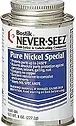
1. Purchase a tube of "dielectric grease".
Dielectric grease will keep moisture from correding you electrical connection. It will conduct electricity; its job is to help keep the connection from corroding. Don't waste money, buy the marine grade SENSOR GRADE (blue).
2. Purchase a small set of stainless steel brushes. The set shown below is what we use in our shop. The small brush on the top is great for getting into tight places. They are cheap! To the best of your ability, brush each connector; they should look somewhat "shiny". Corrison is a dull color; bare metal is not.
3. I have found that cheap "Q" tips work well, especially in tight places. Wipe off excess grease and ensure the connection is tight.
4. Purchase a high-quality silicone sealant, not normal household silicone, as it has acetic acid (vinegar), which will corrode your connection. After you have cleaned, greased, and reconnected the electrical connections, it is time to seal them. I like using a "Q" tip, coating it with silicone. The better the coverage, the longer the connection will last. Since this is silicone, it will cure to a soft state; you can easily penetrate it with a meter probe for troubleshooting.
5. Use stranded pure copper wire, not copper clad aluminun! Lincoln has been using this type of wire in their coils for years! You can't get a good solder joint, and as soon as the copper clad is broken, you have a starting point for corrosion.
5. The biggest problem we see in electrical repairs is improperly crimped connections. You can have a poorly connected crimp that causes an intermittent problem, and you will end up wasting hours and pulling your hair out, rather than paying someone over a hundred dollars an hour to hunt down your screw-up! These are expensive, but once you use them, you'll really appreciate them. They have a lifetime warranty, mine never wear out, they walk away.




Rewiring Your SA-200/SA-250
Almost every machine that comes through our shop has wiring problems. They are old and rotted, have poor connections, or have been patched up. You can rewire your machine is you follow our instructions, if you do it right it shouldlast you for the rest of your life. We have insulation material and procedures that no one will share with you.

There is nothing magical about most electrical parts from the OEM (Original Equipment Manufacturer). Switches, indicator lights, meters, GFI, power outlets, circuit breakers, and hardware are sourced on the open market. Remember, every original part on the machine was sourced from the lowest bidder and the minimum they think they can get away with.
Replacing electrical components, what to buy and why?
I prefer toggle switches with screw terminals; push-on switches work fine, but they are prone to coming loose. Buy a single-pole single-throw switch
1. Let's start with wire. In the trade, this is known as: "hookup wire." For most of the wiring in the engine control, you can use a good-grade 14-gauge wire. You want pure copper (not copper coated aluminun) stranded wire.
2. Since you are going to be doing the service on your machine, let's do it right and save you time and headaches.
3. You can rewire your machine with the same color of wire, but I don't recommend it.
The unofficial color code in the welding industry is something like this.
Green is the circuit ground for the engine controls.
Red is 12 volts on (hot) while the engine is running.
Blue, black, or yellow is for wires that are temporarily powered (Hot), such as the starter button, the engine automatic kill switch, or any auxiliary power application.
I prefer to connect a green wire from the magneto kill terminal to the kill switch. You put 12 volts on it, and you can kiss the coil goodbye. I prefer yellow for intermittent 12V power, such as the starter button to the starter solenoid and the 12 volt positive lead to the Ider board and one side of the idle solenoid. For the wire from the solenoid back to the PC board, Lincoln used white, and I have always stuck with
the color.
4. After you have cleaned, repaired, and generally cleaned up your wiring with tie wraps (you'll use more 4" than any other length- if you need something longer, they can be linked together).


